Choice Doesn’t End at Hospice

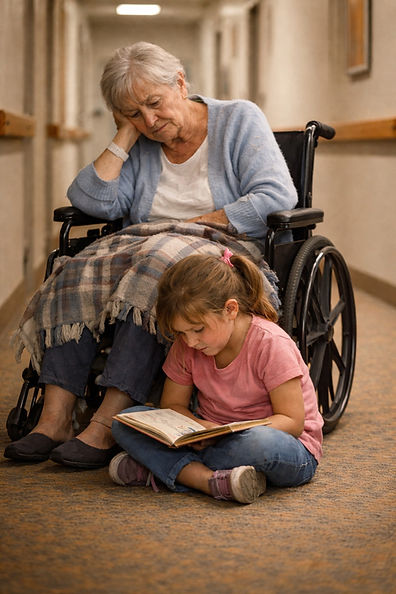
Margaret was eighty years old.
She was also dying.
The staff knew. Under her photo in the computer chart were the words Hospice. DNR.
Her body was failing.
Most days, she used what little energy she had on kindness.
She laughed at staff jokes.
Complimented visitors.Remembered the name of every CNA.
But that morning, she was tired.
An eight-year-old girl sat cross-legged on the floor in front of her wheelchair, a children’s book open in her lap. She leaned against the wall, shoulders slumped, face flushed with effort. Each word came out slowly, broken into pieces.
She stumbled.
Started over.
Tried again.
Her eyes filled with tears.
Margaret watched.
Watched the girl struggle.
Watched her embarrassment grow with every mistake.
And Margaret was tired.
She had not chosen to spend her day listening to a frightened child perform.
She had not volunteered to be anyone’s “reading buddy.”A child with a book had simply been placed in front of her and told to read.
The girl looked up at her, desperate for reassurance.
Margaret had had enough. She looked down at the girl.
“You can’t read worth shit,” she said.
I blurted her name before I could stop myself.
“Margaret!”
She shrugged.
“It’s true,” she said.
I didn’t understand.
“How do you know this child?” I asked.
“I don’t,” she replied.
“Who brought you here?” I asked the girl.
“I came with my class,” she whispered.
Margaret turned her wheelchair and rolled back to her room.
“I’m in hospice,” she called over her shoulder.“
And this is not how I want to spend my time.”
Later, I learned about the program.
On Fridays, third graders from the elementary school across the street came to read to residents. It was meant to help children practice reading and help older adults feel connected.
On paper, it was perfect.
But no one had asked Margaret if she had the emotional energy to encourage a struggling child.
Someone assumed she would.
Because she was “nice.”
Because people in care facilities are expected to be grateful for whatever attention they receive.
Intergenerational programs can be beautiful. Research shows they reduce loneliness and improve learning. When done well, they create real connection.
But only when people are given the choice to participate.
Even in hospice.
Especially in hospice.
To protect resident privacy, identifying details in this story have been changed. The situations described reflect real issues encountered in long-term care.


Comments